

24 inch Balance Bike Ages (9-13+), Balance Bikes For Older Kids, Balance Bikes for Special Needs & Autistic Kids, Convertible Balance Bikes, Kids Balance Bikes Australia, Kids Bikes Australia
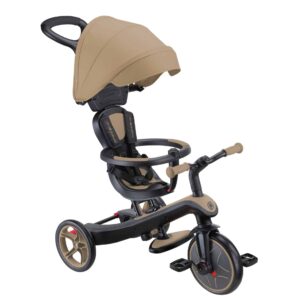
$749.00Get notified This product has multiple variants. The options may be chosen on the product pageTricycle Ride-ons, 12 Inch Balance Bikes Ages (2-4yrs), Balance Bikes for Special Needs & Autistic Kids, Convertible Balance Bikes, Kids Balance Bikes Australia, Kids Bikes Australia
Original price was: $399.00.$379.00Current price is: $379.00.Get notified This product has multiple variants. The options may be chosen on the product page
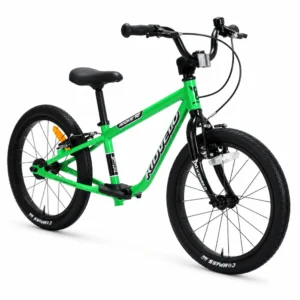
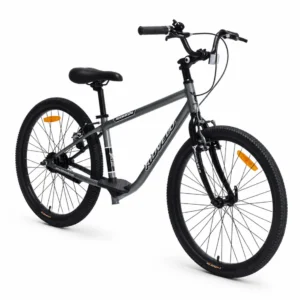
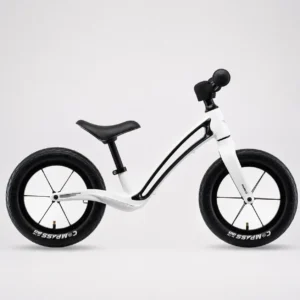
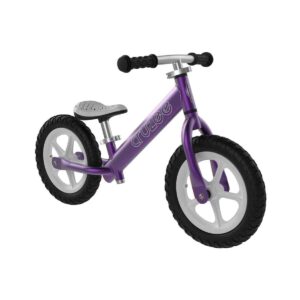
Showing all 7 resultsSorted by latest
How to Choose the Best Kids Bike for Your Child
This matters whether you are a parent buying a first bike or a grandparent choosing a birthday or Christmas gift. A correctly sized bike feels easier to balance, steer and stop. A bike bought with too much “growing room” can feel intimidating and may slow a beginner’s progress.
1. Measure Your Child’s Inseam
You can measure inseam at home in about two minutes:
- Ask your child to stand in socks with their back against a wall.
- Place a book firmly between their legs, with the spine level like a bike seat.
- Measure from the floor to the top of the book in centimetres.
- Compare that measurement with the inseam range shown on the bike’s product page.
Gift-buying tip: ask the child’s parent for their current inseam rather than guessing from age or clothing size. It is the simplest way to avoid choosing a bike they cannot comfortably control.
2. Use This Kids Bike Size Chart
Xchange Sports lists wheel sizes in inches and their approximate metric equivalents. The two measurements describe the same wheel category: 12 inch is approximately 30cm, 14 inch is 35cm, 18 inch is 45cm and 24 inch is 60cm.
| Inseam | Wheel Size | Approx. Age | Shop Size |
|---|---|---|---|
| 30–46cm | 12 inch / 30cm | 2–5 years | 12 inch kids bikes |
| 40–58cm | 14 inch / 35cm | 3–6 years | 14 inch kids bikes |
| 48–68cm | 18 inch / 45cm | 5–8 years | 18 inch kids bikes |
| 62–84cm | 24 inch / 60cm | 9–13+ years | 24 inch kids bikes |
Ages are a guide only. Children of the same age can have very different leg lengths. Always check the model-specific size information before ordering.
3. Check Foot Position and Riding Experience
For a first balance bike or a convertible bike in balance mode, your child should be able to place both feet flat on the ground while seated. This helps them push, balance and stop without panic.
More confident pedal-bike riders may use a slightly different seat position for efficient pedalling. Follow the manufacturer’s fit range and make sure your child can start, stop, steer and reach the brakes safely before every ride.
Why a Lightweight Kids Bike Is Easier to Ride
Bike weight affects how easily a child can steer, accelerate, ride uphill and pick the bike up after a fall. Lighter kids bikes are generally easier for small riders to manage than heavy steel bikes of the same size.
There is no single legal bike-to-child weight percentage that suits every rider. Instead, compare the actual bike weights, consider your child’s strength and choose the lightest suitable model that still offers the fit and features they need.
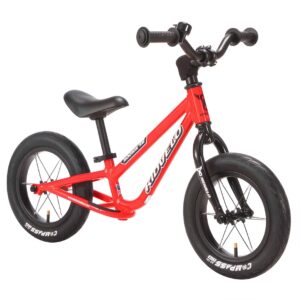
For example, the Kidvelo Rookie 12 balance bike weighs approximately 2.93kg. Its lightweight aluminium frame helps toddlers move and turn the bike without wrestling against unnecessary weight.
Which Type of Kids Bike Is Best?
The right bike type depends on the skill your child needs to learn next. Use this quick comparison to choose the most useful starting point.
| Bike Type | Best For | Main Benefit |
|---|---|---|
| Balance bike | Toddlers and first-time riders | Builds balance and steering before pedalling |
| Convertible balance bike | Children ready to progress on the same bike | Starts in balance mode and converts to pedals |
| Tricycle | Young children who need three-wheel stability | Introduces steering and pedalling on flat surfaces |
| Large balance bike | Older or taller beginners | Teaches balance without placing an older learner on a tiny bike |
Balance Bikes for Toddlers and Beginners
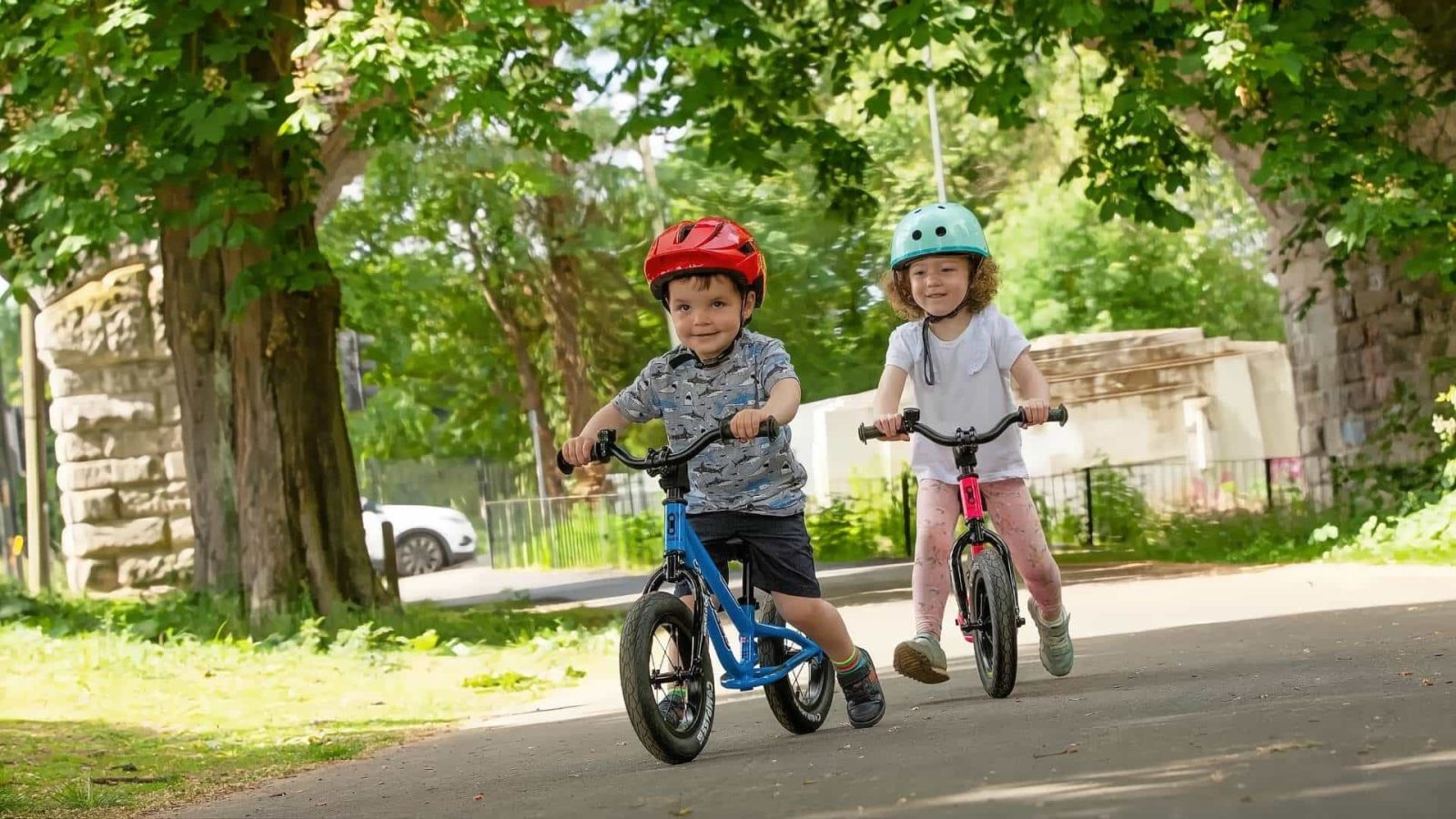
A balance bike has no pedals. Children move it with their feet and learn to balance, steer and slow down before adding the extra task of pedalling.
Research comparing balance bikes and bicycles with training wheels suggests that balance bikes can help children develop independent cycling skills earlier. Progress still varies by child, so comfort and regular practice matter more than rushing to the next stage.
Explore balance bikes for kids, including sizes for toddlers, school-age beginners and older riders.
Convertible Balance Bikes That Grow With Skills
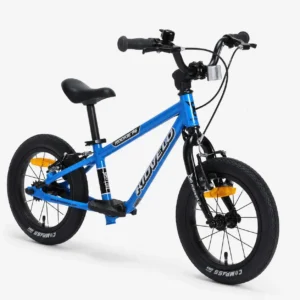
A convertible balance bike begins without pedals. When your child can glide, steer and stop confidently, the pedal kit can be added to the same familiar frame.
This can make the move to pedalling feel less intimidating because the child keeps the bike geometry, controls and colour they already know. Compare convertible balance bikes in 14, 18 and 24-inch sizes.
Tricycles for a Stable First Ride
A tricycle can suit a younger child who is not ready to balance on two wheels or who benefits from extra stability. Choose a model that matches the rider’s height, allows comfortable steering and is used on a flat, suitable surface with adult supervision.
Browse kids tricycles and toddler trikes for early riding stages.
What to Look for When Buying Kids Bikes Online
Once you know the correct size, compare the features that will make the bike easier for your child to use.
- Low minimum seat height: helps beginners reach the ground securely in balance mode.
- Lightweight frame: makes steering, carrying and hill starts easier.
- Child-sized brakes: should be easy for small hands to reach and operate.
- Adjustable seat and handlebars: provide useful fit changes as your child grows.
- Suitable tyres: choose tread and construction for footpaths, parks and the surfaces your child uses most.
- Clear size information: check inseam, seat range, rider limit and wheel size before checkout.
- Local support and spare parts: make future adjustments and repairs simpler.
If your child is moving into technical mountain-bike trails, BMX racing or road cycling, seek activity-specific advice. Specialist bikes, helmets and protective equipment may be required for those environments.
Boys Bikes and Girls Bikes: Fit Comes First
Many children’s bike models use the same core frame and components across different colours. Labels such as boys bikes and girls bikes often describe colour or graphics rather than the fit your child needs.
Choose by inseam, bike weight and riding ability first. Once the correct models are shortlisted, let your child choose a colour they will be excited to ride. That approach gives parents and grandparents a safer, more useful gift than choosing by colour alone.
Kids Bikes for Older Beginners and Additional Needs
Learning to ride is not limited to one age. Larger balance bikes give older or taller beginners the same balance-first pathway available to toddlers, without forcing them onto an undersized frame.
The Kidvelo Rookie 18 convertible balance bike suits many riders with a 48–68cm inseam. The larger Kidvelo Rookie 24 is designed for riders with a 62–84cm inseam and includes two-speed automatic gears for the pedal-bike stage.
Children with additional physical, sensory or developmental needs may benefit from a slower progression and a bike selected around their individual abilities. Explore balance bikes for children with additional needs, and consult the child’s treating professional when personalised guidance is required.
Australian Bicycle and Helmet Safety
The Australian mandatory bicycle standard covers specified design, construction, performance, testing, labelling and safety requirements for bicycles within its scope. Some small bicycles and specialist competition bikes are excluded, so avoid treating one standard as applying identically to every product.
Parents and grandparents can review the official ACCC bicycle mandatory standard before buying.
A correctly fitted helmet is essential. Australia’s current mandatory helmet standard recognises AS/NZS 2063 and specified overseas standards. State and territory road rules determine when an approved, securely fastened helmet must be worn, so check the rules where your child will ride.
Read the ACCC bicycle helmet mandatory standard and the Raising Children Network riding safety guide for independent information.
Complete the setup with correctly sized kids bike helmets and practical kids bike accessories, including gloves, protective gear, bells, lights, locks and pumps.
Kids Bikes Delivered Australia-Wide
Xchange Sports sends in-stock kids bikes from its Sydney warehouse to metro, regional and remote Australian addresses. In-stock orders leave the warehouse within two business days, with tracking sent after dispatch.
- 12, 14 and 18-inch bikes: $20 flat-rate Australia-wide shipping.
- Kidvelo Rookie 24: $60 flat-rate Australia-wide shipping due to the larger carton.
- Estimated transit after dispatch: 2–5 business days for metro areas, 3–8 for regional areas and 5–12 for remote areas.
Transit times are estimates rather than guaranteed delivery dates. Check the current shipping and delivery policy before ordering for a birthday, Christmas or another fixed date.
Kids Bike FAQs
What size kids bike should I buy?
Measure your child’s inseam and compare it with the bike’s recommended range. Use age only as a secondary guide. For beginners using balance mode, confirm they can place both feet flat on the ground while seated.
Is a 12-inch bike suitable for a two-year-old?
A 12-inch balance bike can suit many two-year-olds when their inseam falls within the model’s fit range. The Rookie 12 is designed for a 30–46cm inseam, but measuring is more reliable than choosing by birthday.
What age is a balance bike for?
Balance bikes are commonly used from toddlerhood, but larger models also suit older children who have not yet learned to ride. Xchange Sports carries balance bikes from 12 to 24 inches for riders at different stages.
Should a child’s feet touch the ground?
In balance-bike mode, beginners should be able to place both feet flat on the ground while seated. Pedal-bike fit can differ, so follow the manufacturer’s guidance and confirm the rider can start and stop safely.
Are lightweight kids bikes better?
A lighter bike is usually easier for a child to steer, accelerate, carry and recover after a wobble. Weight is not the only factor, so compare it alongside fit, brakes, adjustability and intended use.
What is a convertible balance bike?
It is a bike that starts without pedals and later converts to a pedal bike. It allows a child to learn balance first, then add pedalling while staying on a familiar frame.
Shop Kids Bikes Online in Australia
Choose the size that matches your child’s inseam, then compare balance bikes and convertible kids bikes for their next riding stage. Xchange Sports helps Australian parents and grandparents find lightweight children’s bikes for first rides, growing confidence and family adventures.
Shop all kids bikes at Xchange Sports Australia or browse by wheel size to reach the most suitable options faster.